
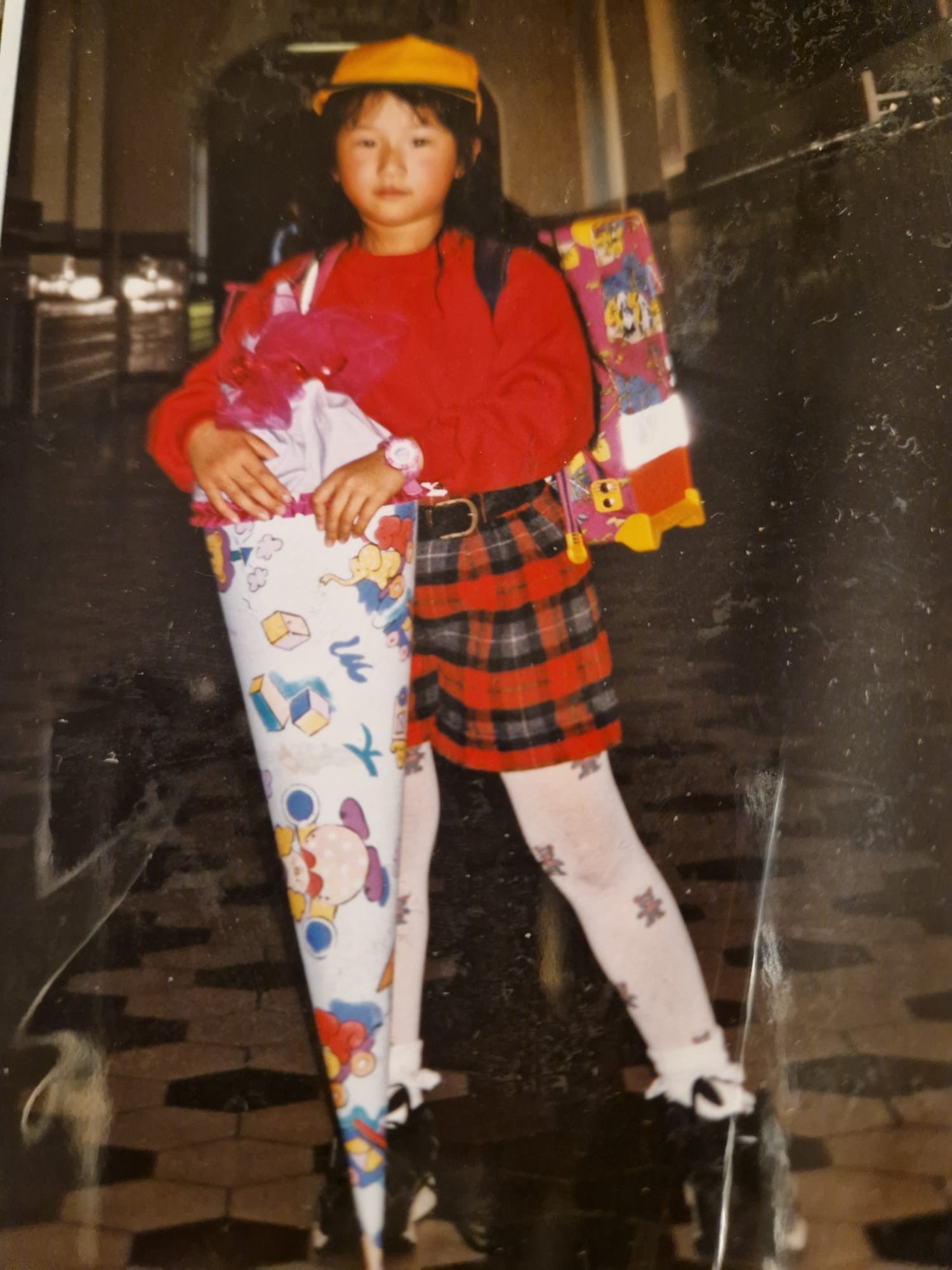
Coming from an Asian household and being born in a western country, I always struggled with my identity. I knew I was different on the first day in school when a white boy called me: ‘Ching chang chong’ and squinted his eyes. Those words didn’t even make sense, but still, they affected me.
At home, we talked Chinese and most of the time ate Chinese food. My mom and aunts (I grew up without a dad) raised me the Asian way. Study hard to get a better life than they had, don’t spend too much time on unnecessary hobbies (unless it generates money somehow), never do drugs and alcohol, and be a good, respectful girl. All in all, do what the elders are telling you to do. One thing to know about Asian households (most of them) is that they seek harmony within their family cycle. Meaning unpleasant topics should be avoided or not discussed.
Because if you never talk about bad subjects, it will not happen, right?
Paradoxically growing up in Germany, I learned it the different way. Discussing and critical thinking about specific topics makes you ‘smart’ and educated. You should be confident and direct and have your own opinion (about everything!). If there is something you don’t like, speak up and say what you want.
In Chinese culture, you listen first before sharing your opinion and tend to agree most of the time, even though you may disagree. It is better to share the same view with everyone than express your thoughts not to cause any conflicts. People in Germany also tend to be more individualistic. Of course, family and friends are important, but the needs of an individual should not be suppressed. In Chinese culture, you first consider your family before making any decision. For example, what to study, where to work, who to marry, and so on.
It is not like Germans do whatever they want and never talk with their family about those lifetime decisions. It is more like their individual opinions are being taken more seriously. I always felt like my German friends had more freedom in choice than me and were more honest with their families.
Often I had a different opinion about specific topics with my family. The moment I say my opinion out loud, and they don’t agree, we start to argue. Somehow it is unacceptable to have your own opinion and thoughts about things, especially when you are younger. I learned to keep silent about specific topics when talking with my family. If I disagree, I don’t say anything at all. That is how I learned to keep my true thoughts to myself.

Unfortunately, this behaviour became part of my identity. It impacted my friendships, relationships, and working style—especially my relationship with myself. I could not take my own words and thoughts seriously anymore.
How the hell should I know what I want? If the things I want don’t matter if it does not align with my family’s perception. How can I speak up if my voice doesn’t matter?
When I finished my studies, I knew I needed a change. It triggered me to go abroad for an internship—the first time living alone with 24. So, I applied for an internship at a large German cooperation in Singapore and got accepted, luckily.
I remember crying at the airport (with 24) when I said goodbye to my mom and sister. I was so overwhelmed and stressed. I had never been to Singapore. It was my first time flying alone, my English was not the best, and I did not know anyone there. That was the first time being out of my comfort zone.
During that time, I also realized how dependent I was on the family. My whole life, I never really decided something for myself, and now I am ‘alone’ and need to figure out myself in a new city. I was overwhelmed by small things, like taking care of my Visa and opening a bank account, finding directions, and even cooking for myself. On the one hand, I think it is normal to be overwhelmed when moving abroad, especially if it is your first time. On the other hand, all the other interns I met seemed to be so independent and confident.
I was stressed all the time.
However, things changed in the first weeks. Somehow, I was interested in the Singaporean people. (Singapore is a multi-ethnic society and a very diverse city consisting of Chinese as the majority, Malay, Indians, and Eurasians)
They saw my Chinese face but realized I was different when the conversation started. I had a German way of thinking about things. The Chinese people I met wanted to know everything about the German culture, the food, and even dating. I felt comfortable sharing and somehow proud. Proud to be different.
At the same time, I was enjoying the time with them because I felt like they were treating me like family. Very warm and welcoming. Like home. It was the first time me having Asian friends. That was the moment when I found myself back in my Chinese roots. It was not that bad to have two cultures. With Singapore being such a diverse city, I also met people from all over the world, even people with similar identity struggles.
Despite all the challenges and anxiety at the start, it was the best decision I made and so important.
- Firstly, get out of my comfort zone and realized that I could decide for myself.
- Secondly, have this distance from the family to grow into adulthood and make my own mistakes.
- And lastly, finding back to my Chinese culture and be proud.
After those seven months and returning to Germany, I changed a lot, but I don’t think my family did recognize my transformation.
Where am I now?

I don’t give a ♠♥ anymore. I realize I will never wholly fit into both worlds.
And it is OK. Sometimes I like my Chinese side more than my German side. Sometimes it is the other way around.
I am a mix of both. And I am grateful for both cultures.

 jutheblog
Leave a comment